
The world of digital entertainment is changing fast. A mix of artificial intelligence and cryptocurrency is changing how we play and create in virtual worlds.
This change is moving away from old, centralised ways. It brings a new era of player empowerment. Now, we have true digital ownership and clear economies.
The future looks bright. Crypto.com says the blockchain gaming market will hit $3 billion this year. It’s expected to grow to $65 to $90 billion by 2030.
This isn’t just a small step forward. The mix of gaming and AI crypto is changing entertainment for good. It’s creating the base for new virtual societies and economies.
The Evolution of Digital Gaming: From Pixels to Ownership
In the 1970s, arcade games were simple. You put in a coin and played for a bit. This was the start of how we saw games for years. You paid to play, not to own.
Home consoles and computers changed things. Games became something you could keep. But, it was more like renting than owning. You had to follow rules set by the game makers.
The internet brought new worlds and shops online. Players spent lots of time and emotions on their games. But, they didn’t really control the game’s direction. Designers made the big choices.
The old way had a big problem. Players built up digital wealth but didn’t own it. A server could go down, or a rule change could take it all away. It was all controlled by one company.
Now, blockchain is changing everything. It makes digital items real and tradable. Players now have true control over their digital world.
“My legendary sword wasn’t just a line of code in their database anymore; it was an asset I could prove was mine, trade, or even use in another compatible game.”
This shift from simple games to owning digital assets is huge. It shows why blockchain gaming is more than a passing fad. It’s a big change, making players true owners of their digital worlds.
Understanding Blockchain Gaming: More Than Just Play-to-Earn
Blockchain gaming is more than just making money. It’s a big change in how virtual worlds work. The Play-to-Earn model is just one part of this change. It changes how we own, trade, and play in games.
Blockchain gaming is built on three main things. These technologies make games that are always changing and player-focused. They move power from big servers to networks run by code.
The Pillars of Blockchain Gaming Technology
The first key is smart contracts. They are the rules of the game and keep things fair. These programs on the blockchain handle things like trading and winning tournaments without middlemen. This makes games fair and safe for everyone.
The second key is native cryptocurrencies and tokens. These digital coins power game economies and encourage players to keep playing. Players can earn tokens for their achievements, which can be worth something in real life.
The third key is Non-Fungible Tokens (NFTs). These are unique digital items like characters or land. Unlike regular game items, NFTs let players own and trade them freely across games.
Together, these pillars give players a real stake in the game world. Games become living economies, not just places to play. This tech lets games do more than just earn money.
Leading Blockchain Gaming Platforms: Ethereum, Solana, and Polygon
For games to work well, they need strong blockchain platforms. The platform chosen affects how well a game runs, how much it costs, and how players feel. Games need to handle lots of transactions quickly and cheaply.
Developers pick between well-known platforms and newer, faster ones. Each has its own strengths and weaknesses. The best choice depends on what the game needs and what its players want.
| Platform | Key Feature | Transaction Speed | Cost Per Transaction | Primary Use Case in Gaming |
|---|---|---|---|---|
| Ethereum | Maximum Security & Established Ecosystem | 15-30 Transactions per Second (TPS) | Variable, Can Be High | High-value asset trading and established game economies |
| Solana | High Speed & Low Cost | Up to 65,000 TPS | Extremely Low | Fast-paced games requiring instant micro-transactions |
| Polygon | Ethereum Scalability via Layer 2 | Up to 7,000 TPS | Very Low | Scaling existing Ethereum games to reduce fees and congestion |
Ethereum is the most secure and widely used platform. It has a huge community of games and NFTs. But, it can get slow and expensive during busy times.
Solana is fast and cheap, making it great for games that need quick action. It’s popular for building big, new games.
Polygon is a way to make Ethereum games run faster and cheaper. It works by doing some tasks off the main Ethereum chain. This keeps games fast and affordable for players.
The growth of these platforms shows the gaming world’s push to improve. As tech gets better, the gap between old and new games keeps getting smaller.
The Rise of Artificial Intelligence in Modern Game Development
Modern game development is changing, thanks to artificial intelligence. This change is not about better graphics but about smarter game design. AI makes games more interactive and immersive.
AI now handles tasks that were once simple. It creates dynamic stories and living worlds. This makes games more engaging and realistic.
The shift is from fixed designs to systems that learn and adapt. This foundation will soon combine with blockchain technology. It will create new types of games.
From Scripted Behaviours to Adaptive NPCs
For years, non-player characters followed the same paths and lines. This made games feel less real. Now, adaptive NPCs use AI to act more like real people.
These AI characters can change how they behave based on your actions. They might remember your past actions or learn from battles. This leads to unique experiences every time you play.
| Aspect | Traditional Scripted Systems | Modern AI-Driven Approaches |
|---|---|---|
| NPC Behaviour | Fixed, predictable patterns and dialogue trees. | Dynamic, reacts to context and player history. |
| Learning Capacity | None. Actions are pre-defined. | Can adapt strategies and remember interactions. |
| Player Experience | Linear, often repetitive storylines. | Emergent narratives and high replayability. |
| Developer Input | Manual scripting for every scenario. | Training AI systems with core rules and goals. |
Procedural Content Generation and Personalised Experiences
World building has also seen a big change. Designing every detail by hand is too much work. Procedural content generation uses algorithms to create worlds and quests instantly.
AI doesn’t just make random things. It creates landscapes and quests that make sense. This means every player has a unique experience.
Personalisation goes even further. Loot and quests can change based on how you play. This makes games feel like they’re made just for you.
Together, AI’s ability to create dynamic NPCs and worlds shows its power. It’s making games more engaging and varied. This is just the beginning, as AI will soon work with blockchain technology.
The Convergence: Where Gaming and AI Crypto Meet
A new frontier is emerging at the crossroads of gaming and AI crypto. This isn’t just a simple mix. It’s a complete overhaul of how we interact online. It combines the smart systems of AI with the open, user-controlled world of blockchain.
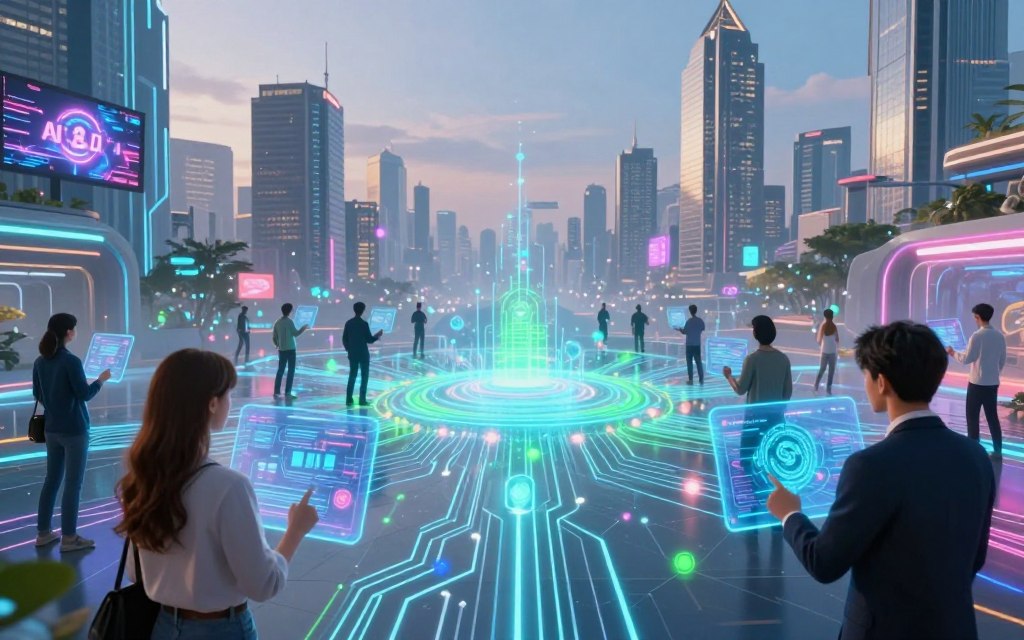
The move to decentralisation is changing gaming’s structure. It’s moving power from big studios to a network of players and creators. This opens up a new level of collaboration, where AI can be owned, traded, and improved by the community.
Defining the “AI Crypto” Element in Gaming
“AI crypto” means making AI assets and processes in games open and tradable. It turns AI from a secret tool into something players can own and use.
AI characters, unique quest generators, or economy balancers can all be turned into digital assets. These are locked on a blockchain, making AI a dynamic, ownable thing with a clear history.
How Blockchain Unlocks New AI Possibilities
Blockchain is key to making this vision work. It offers transparency, security, and a permanent record. This opens up new blockchain AI possibilities that were impossible before.
First, it lets us create verifiable, rare AI models as NFTs. A player could own a unique NPC with its own learning and actions. The blockchain proves who owns this digital intelligence.
Second, it sets up open markets for trading AI. Players can sell or rent out AI companions or art generators. Smart contracts handle these deals, cutting out middlemen and ensuring fair pay.
Lastly, blockchain lets communities decide on AI development in games. They can vote on AI changes, ethics, or new tools. This brings together AI and community-driven ownership, creating a space for innovation and collaboration.
Key Technologies Powering the Synergy
Two key technologies are driving this convergence. They meet the need for powerful computing and trust. These innovations are turning the vision of intelligent, player-owned worlds into reality.
Decentralised Physical Infrastructure Networks (DePIN) for AI
Decentralised physical infrastructure networks are changing the game for AI in gaming. They offer a way to train and run complex AI in real-time. This was previously only possible in centralised data centres.
DePINs democratise access to these resources. They bring together computing power from a global network of providers. This creates a marketplace for computing power. It makes it easier and cheaper for developers to use AI in their games.
This setup is key for the next level of game intelligence. It powers dynamic worlds and complex NPCs without a single point of failure.
Verifiable AI and On-Chain Provenance
Verifiable AI brings trust to the table. It uses blockchain’s strengths of transparency and security. In gaming, it records important AI details on the blockchain.
Think of an AI-powered legendary sword or a unique NPC. Verifiable AI records their key characteristics on the blockchain. This creates a secure, auditable trail for every transaction and update.
This is huge. It lets players check the authenticity and fairness of AI assets. It fights fraud by proving an item’s AI lineage. For competitive games, it ensures NPCs and game directors are fair, building trust with players.
Transformative Use Cases in Blockchain Gaming
The mix of blockchain and AI is changing gaming. It’s not just ideas; it’s real changes in how we play. Games are becoming more alive, with every action affecting the game world.
AI-Driven Autonomous Game Worlds and NPCs
Imagine a game world that keeps changing after it’s released. This is what autonomous game worlds offer. They evolve based on how players play, making stories and challenges appear on their own.
Non-player characters (NPCs) are more than just characters. With AI, they remember and react to players. A merchant might change prices based on past trades, or a leader could adjust their diplomacy.
These worlds can be run by the players themselves. Through voting, communities decide on big changes. This makes the game world a place where players are true co-creators.
Intelligent, Generative In-Game Assets
Ownership in games is changing too. NFTs are now more than just tokens; they’re smart assets. They can grow and change based on player actions.
An intelligent, generative in-game asset is an NFT with AI. It’s not just a symbol of ownership but a living, breathing part of the game. A sword could change its look and abilities based on battles won. A pet could learn new tricks, and land could generate new quests.
This mix of NFTs and AI makes games more engaging. Players own assets that can grow and change. This creates new ways to play and collect. Learning about blockchain in games is just the start. The real magic happens when these assets come to life in the game world.
Current Pioneers and Market Leaders in AI Crypto Gaming
Blockchain and AI are now working together in exciting ways. A few projects have turned ideas into real games, leading the AI crypto gaming field. They show how this mix is changing how we play games.
The Sandbox: User-Generated Content and AI Tools
The Sandbox is a top metaverse platform known for user-generated content (UGC). It’s using AI to help creators, not replace them. This makes creating in the Sandbox easier and more fun.
Imagine having AI help with making 3D assets, writing game scripts, or adding details to virtual worlds. The Sandbox’s AI tools make creating high-quality content easier. This lets players become architects, making the metaverse more exciting and personal.
AI Arena: Training and Battling AI-Powered NFTs
AI Arena is different, focusing on AI as a competitive asset. Players don’t control characters live. Instead, they train and evolve AI agents as NFTs.
The game’s core is machine learning. You train your AI agent to improve its strategies. Then, you battle other players’ AI worldwide. This game rewards strategy and AI knowledge as much as quick reflexes.
Parallel: AI-Enhanced Collectible Card Game Mechanics
Parallel is a collectible card game that uses AI to enrich gameplay. It has amazing artwork and strategic battles on the blockchain. AI also helps with the game’s sci-fi story and evolving lore.
The future of AI in Parallel looks bright. AI could create dynamic opponents or story events based on player choices. Parallel shows how AI can make games more immersive and engaging.
These AI crypto gaming pioneers show how AI can be used in different ways. From creating in a metaverse to the heart of a card game, they prove AI gaming is growing and exciting.
The Tangible Benefits for Players and Developers
AI crypto gaming brings real value to both players and game creators. It moves beyond just new tech to offer practical benefits. These benefits change how we play, create, and earn in digital worlds.
True Digital Ownership and Asset Interoperability
For years, gamers bought licences for digital items but didn’t own them. Blockchain changes this. Now, players have true digital ownership of their in-game assets, like characters and weapons, as NFTs.
This means players can trade, sell, or lease their assets freely. They can make real money from their skills and time. AI-enhanced items also benefit from this.
An AI NFT character trained in one game can keep its skills in another game. This asset interoperability lets players keep their digital identity and inventory with them.
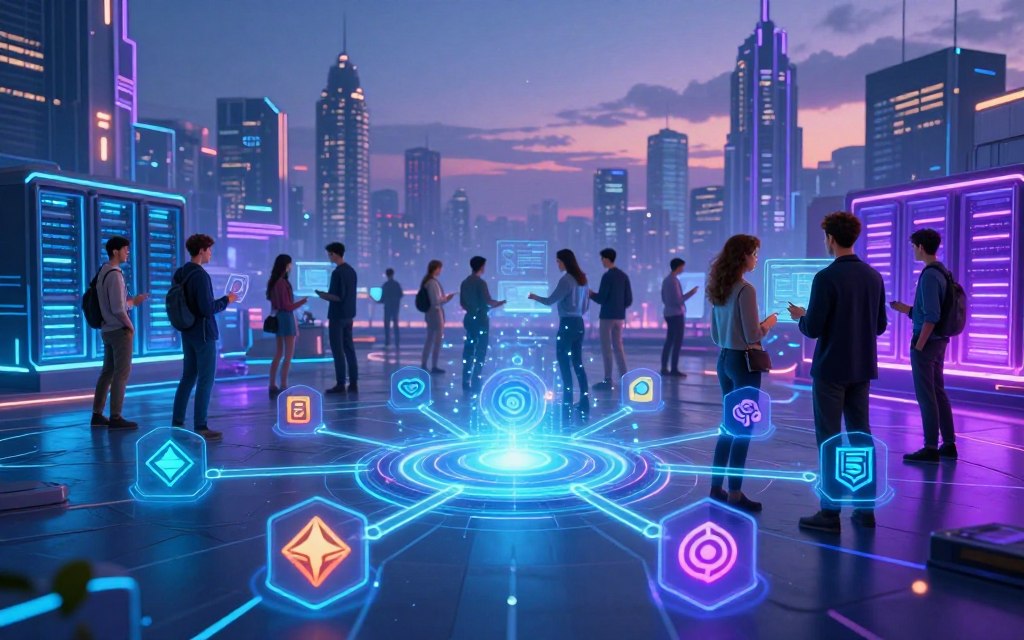
Dynamic, Ever-Evolving Gameplay and Content
Even the best games can get old and predictable. AI makes environments dynamic. Players face NPCs that learn and adapt, making each encounter unique.
“The integration of AI doesn’t just add smarter bots; it creates a living, breathing world that reacts to the community. It’s the difference between visiting a museum and exploring a forest—you never know exactly what you’ll find.”
AI also creates unique quests and landscapes. This keeps the game world fresh, giving players new experiences long after launch. It boosts player engagement over time.
New Revenue Models and Economic Participation
The economic side is greatly changed. The play-to-earn model showed that games can earn money. AI crypto gaming goes further, creating a participate-to-earn economy. Every interaction can have value.
New revenue models are emerging for everyone:
- Players: Earn tokens through gameplay, AI challenges, or renting out AI assets.
- AI Trainers & Data Contributors: Earn by curating data or training AI agents.
- Asset Creators: Sell AI asset templates or unique NFT collections.
- Governors: Earn rewards by helping govern a game’s world and economy.
The table below shows how AI and blockchain change the gaming economy:
| Aspect | Traditional Gaming Economy | AI Crypto Gaming Economy |
|---|---|---|
| Asset Ownership | Licensed from the developer; non-transferable. | True player ownership via NFTs; fully tradable. |
| Content Generation | Static, created solely by developers pre-launch. | Dynamic, continuously generated by AI and players. |
| Primary Revenue Source | Game sales, DLC, microtransactions (developer-led). | Token transactions, asset trading, service fees (participant-led). |
| Player Role | Consumer. | Co-creator, investor, and governor. |
This shift creates new jobs and lets players build real value in digital worlds. The value goes back into the ecosystem, making it more sustainable and inclusive for all.
Significant Challenges and Considerations
There are big hurdles between AI crypto gaming’s current state and its future. It faces many practical, legal, and ethical challenges. These must be solved for growth.
Technical Hurdles: Scalability, Cost, and Integration Complexity
Blockchain networks, like Ethereum, face scalability challenges. They get slow and expensive during busy times. This makes simple actions, like trading, very costly.
Running AI models on blockchain is too hard and expensive. Most use hybrid models, where AI runs off-chain. But this risks centralisation and makes blockchain less trustworthy.
Merging AI and blockchain is very hard. Developers need skills in both areas, which is rare. Making these systems work together adds a lot of complexity.
To solve these problems, new solutions like Layer 2 scaling are being tried. But, making AI-driven games work smoothly in real-time is a big challenge.
Regulatory Uncertainty and Ethical Implications
The legal world is full of unknowns for crypto and NFTs. What’s legal in one place might not be in another. This makes it hard for developers to reach a global audience.
This uncertainty stops investment and innovation. Big gaming studios are scared to enter this space. Players also struggle with managing crypto wallets and understanding blockchain.
Ethical issues are also big. AI in games must be controlled to avoid harm. Bias in AI could spread stereotypes into virtual worlds.
The play-to-earn model can be unfair if not designed well. It’s important to balance rewarding players and avoiding exploitation. The industry might need to set its own rules, like automated trading strategies in DeFi, to stay ethical.
Dealing with regulatory uncertainty and ethical issues is key. It’s not just about following rules. It’s about building trust and acceptance.
Economic Models: Tokens, Incentives, and Sustainable Ecosystems
To make AI crypto gaming last, developers need to create complex economic systems. These systems must be more than just play-to-earn. They need a strong financial base to support the advanced tech of autonomous worlds and smart assets.
The main challenge is moving from short-term gains to building lasting economies. These should reward players for real contributions, not just quick wins.
The Role of Utility and Governance Tokens
At the core are two main token types. Utility tokens are the game’s currency. Players use them for everything from buying items to entering tournaments.
Governance tokens give players a say in the game’s future. They vote on updates, how money is spent, and AI features. This lets the community shape the game.
Designing Incentives for AI Development and Curation
AI adds a new layer to incentive design. A good model rewards players for improving the game’s AI, not just for playing. This encourages teamwork to enhance the game world.
Good incentives might reward players for:
- Contributing Quality Training Data: Players who help train AI with unique scenarios earn tokens.
- Curating AI Behaviours: Rating NPC actions helps improve the game.
- Maintaining Ecosystem Health: Players earn for long-term involvement, not just quick wins.
Getting incentives right is key to a healthy economy. If rewards are too easy, inflation can harm the game. Designing sustainable Play-to-Earn models means rewarding real contributions. This leads to new ways for developers and players to.
The best AI crypto games will foster creativity, teamwork, and investment in the virtual world.
The Future Landscape: Predictions for the Next Decade
We are on the edge of a gaming revolution. Autonomous worlds and easy access will soon be the norm. Blockchain and AI will merge, bringing us sci-fi-like experiences. The global blockchain gaming market is set to hit $10.7 billion by 2026, showing its huge economic promise.
The Path Towards Fully Autonomous Virtual Worlds
The goal is to create living, evolving digital universes. These worlds will change and grow on their own. They will have their own stories, quests, and places, giving each player a unique experience.
These worlds will be run by their players, not just developers. Players with special tokens will decide on the world’s rules and stories. This change puts the world’s future in the players’ hands.
One big feature will be the ability to share things across different worlds. Your items or characters can move between games, thanks to blockchain. This creates a vast, connected universe.
| Aspect | Traditional MMO Worlds | AI-Powered Autonomous Worlds |
|---|---|---|
| Governance | Centralised developer control | DAO-based community governance |
| Content Generation | Pre-scripted, finite updates | Procedural & AI-driven, endless |
| Asset Ownership | Licensed use, account-bound | True player ownership, interoperable |
| Economic Model | Centralised currency, microtransactions | Player-driven, token-based economies |
| World Persistence | Static between updates | Evolves continuously based on player/AI interaction |
Mainstream Adoption and Integration with Traditional Gaming
For this future to happen, mainstream adoption is key. The main problem is making it simple. The next step is to make blockchain and AI easy to use in games.
Players won’t have to deal with complicated wallets or fees. Instead, games will handle everything smoothly, like apps. This makes it easy for more people to join in.
Big gaming studios will team up with blockchain and AI. They will add these features to their big games. This mix will make games and apps hard to tell apart.
The global blockchain gaming market is expected to reach $10.7 billion by 2026, driven by advancements in play-to-earn models, NFTs, and greater acceptance from the gaming community.
This mix will benefit both sides. Traditional games will get digital ownership and lively economies. Blockchain games will get better graphics and more players. Together, they will create a new kind of entertainment where everyone can create and own.
Conclusion
The mix of blockchain and artificial intelligence is changing digital entertainment. It’s not just a trend. It’s a big change in how games are made, played, and owned.
Blockchain gaming sets up a base for real digital ownership and player-led economies. Artificial intelligence adds smart, personal touches to these worlds. Together, they change the social and financial sides of gaming.
This tech mix is leading to a new digital world. It offers immersive, changing worlds. Players get to control their assets and experiences like never before.
Scalability and regulation issues are there, but the future is clear. The blend of these technologies is shaping the future of blockchain gaming. It’s the next step for AI crypto integration in interactive media.
The future brings virtual spaces where creativity, business, and community meet. This change points to a more active and smart digital future. For more on this, check out blockchain and AI in GameFi.
The old days of fixed, controlled games are fading. A new era of player power and smart worlds is coming.
FAQ
What is the core idea behind the convergence of gaming, AI, and cryptocurrency?
This convergence marks a big change from old gaming models to a new era where players are in charge. It combines blockchain’s secure digital ownership with AI’s ability to create smart, dynamic game worlds. This mix is changing how we enjoy games, virtual economies, and digital creativity.
How does true ownership in blockchain gaming differ from traditional games?
In old games, you just get to use items, and the developer can change or take them away. But in blockchain games, you own things like characters or land as NFTs. This means you can trade them freely and they work in different virtual worlds.
What are the key blockchain technologies powering this new gaming paradigm?
The main technologies are Smart Contracts, NFTs, and Native Tokens. Smart Contracts handle game rules and ownership. NFTs represent unique in-game assets. Native Tokens fuel the game’s economy. Platforms like Ethereum, Solana, and Polygon support these technologies.
How is Artificial Intelligence (AI) currently used in game development?
AI has moved from simple NPCs to adaptive ones that learn and react to players. It also creates vast, dynamic game worlds and items. This offers endless variety and personal experiences for each player.
What exactly is meant by “AI Crypto” in the context of gaming?
“AI Crypto” means using blockchain to decentralise AI assets and processes in games. AI models and data can be turned into tradable NFTs. This merges AI with secure, decentralised markets.
What are DePIN and Verifiable AI, and why are they important?
DePIN provides the power needed for complex game AI, making it more robust and accessible. Verifiable AI records an AI model’s training data and outputs on a blockchain. This proves the AI’s fairness and authenticity, essential for trust in AI-driven assets.
Can you give an example of an intelligent, generative in-game asset?
Imagine an NFT sword that evolves its design based on your battles. It learns your combat style and creates lore about its adventures. This combines the unique ownership of an NFT with AI’s adaptability, creating a truly unique asset.
Which projects are pioneering the AI Crypto gaming space?
The Sandbox is using AI to help users create assets and experiences. AI Arena lets players train AI fighters that battle on their own. Parallel, a sci-fi card game, deeply integrates AI into its lore and mechanics.
What are the main benefits for players in AI Crypto games?
Players own AI-enhanced assets that can grow in value and be used across worlds. Gameplay is dynamic and evolving thanks to AI. Players can also earn by contributing AI training data or trading AI NFTs.
What are the biggest challenges facing AI Crypto gaming?
Big challenges include the high cost and latency of running AI on-chain. Integrating AI and blockchain is complex. There’s also regulatory uncertainty and ethical concerns about AI bias and exploitation.
How do the economic models and tokens work in these ecosystems?
Ecosystems use utility tokens for transactions and rewards. Governance tokens let holders vote on game decisions. Sustainable models reward players for valuable contributions, not just trading.
What is the future of AI and crypto in gaming?
The future includes DAO-governed worlds with AI-driven content. For wider adoption, we’ll see easier user experiences and partnerships with traditional studios. This will bring AI Crypto to more players, blending traditional and decentralised gaming.


 By
By